

Quick Summary:
Students spend their days navigating polished, intuitive digital experiences. Yet, when it comes to life on campus, they piece together information across multiple disparate systems — single-purpose tools, duplicate logins and scattered communication channels. This disconnect establishes a digital experience gap: the space between student expectations for a modern digital life and the fragmented experience institutions deliver. As systems continue to multiply, this gap widens — becoming a growing challenge for institutions working to meet rising student expectations.
Pathify’s 2025 Student Digital Experience Survey quantifies the experience gap: 47% of students missed a critical deadline because they were unaware of the due date. Disjointed systems lead to friction at every step, with more effort spent looking for information than acting on it. This growing time sink cuts directly into students’ day-to-day lives, draining time and momentum from what matters most and weakening institutional efforts to support students.
The Time Sink
The survey quantifies the time drain students experience every day. For most, simply tracking down basic information takes far longer than it should. 60% of students spend more than five minutes searching for important information in their institutionʼs digital system, and more than a fourth (27%) spend over 10 minutes for routine tasks like checking a class schedule or confirming a registration hold.
of students missed a critical deadline because they didn’t know it was due — 2025 Student Digital Experience Survey.
spend more than 10 minutes on routine tasks like checking a class schedule.
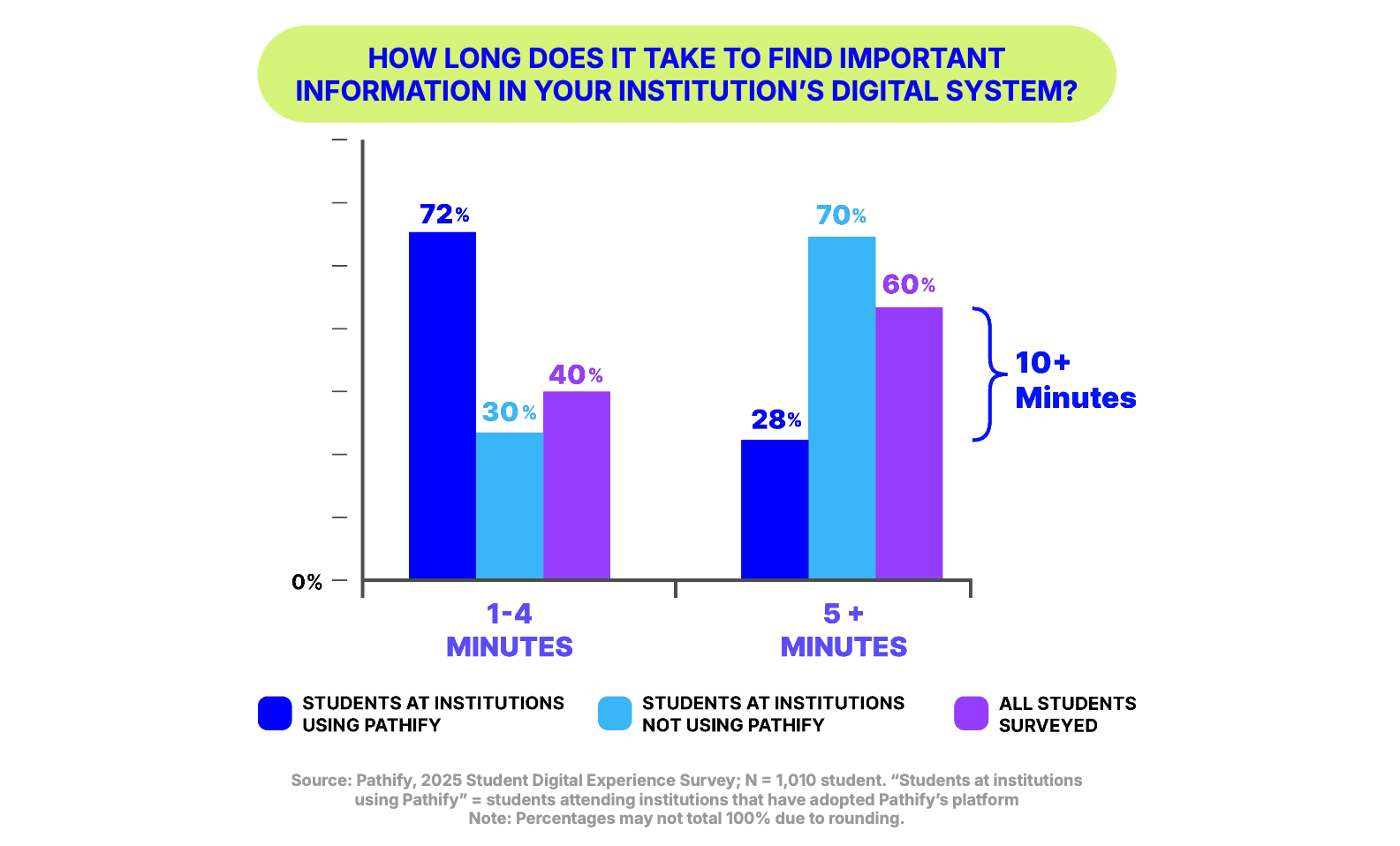
This lost time comes from navigating a digital maze. Two-thirds (66%) of students say they move through multiple links or platforms to complete a single task, like paying a bill or checking their GPA. Instead of a straightforward path, they navigate a chain of tabs, emails and logins before they even start the task itself.
Independently, five to 10 minutes or a few extra clicks may not sound harmful. But spread across every task, deadline, registration window and financial aid requirement, those minutes represent hours of energy pulled away from coursework, development and the experiences institutions promise to students. This time drain signals a growing usability challenge, forcing students to work harder than necessary for basic tasks and increasing strain on institutions. For first-year and first-generation students, the daily inconvenience escalates into an equity barrier.
The Equity Drain
This barrier weighs more heavily on some students than others. First-year and first-generation students shoulder the extra steps and confusion of scattered digital systems.
Survey data clarifies the challenge:First-year students experience “very frequent” frustration at rates 32% higher than non-first-year students. During a year focused on settling in and building community, extra steps and systems result in avoidable issues. Before even arriving on campus, students already spend valuable time digging through systems, emails and links — time institutions should direct toward onboarding.
First-generation students face an even greater obstacle. Without institutional context and knowledge, each instruction or hidden requirement demands more time and effort. First-generation students are 33% less likely than their peers to rate their school’s digital experience “very positively.” Strong support systems matter deeply for these students, and their success proves necessary for educational equity.
The survey data captures the gravity of the equity drain:
“The proliferation of single-purpose digital tools creates a fragmented and frustrating experience directly undermining student success, belonging and academic progression, especially for institutionsʼ most at-risk populations.”
Every disconnected system contributes to an equity drain — quietly widening the gaps in access, support and outcomes.
Every disconnected system contributes to an equity drain — quietly widening the gaps in access, support and outcomes.
The Toll on Students
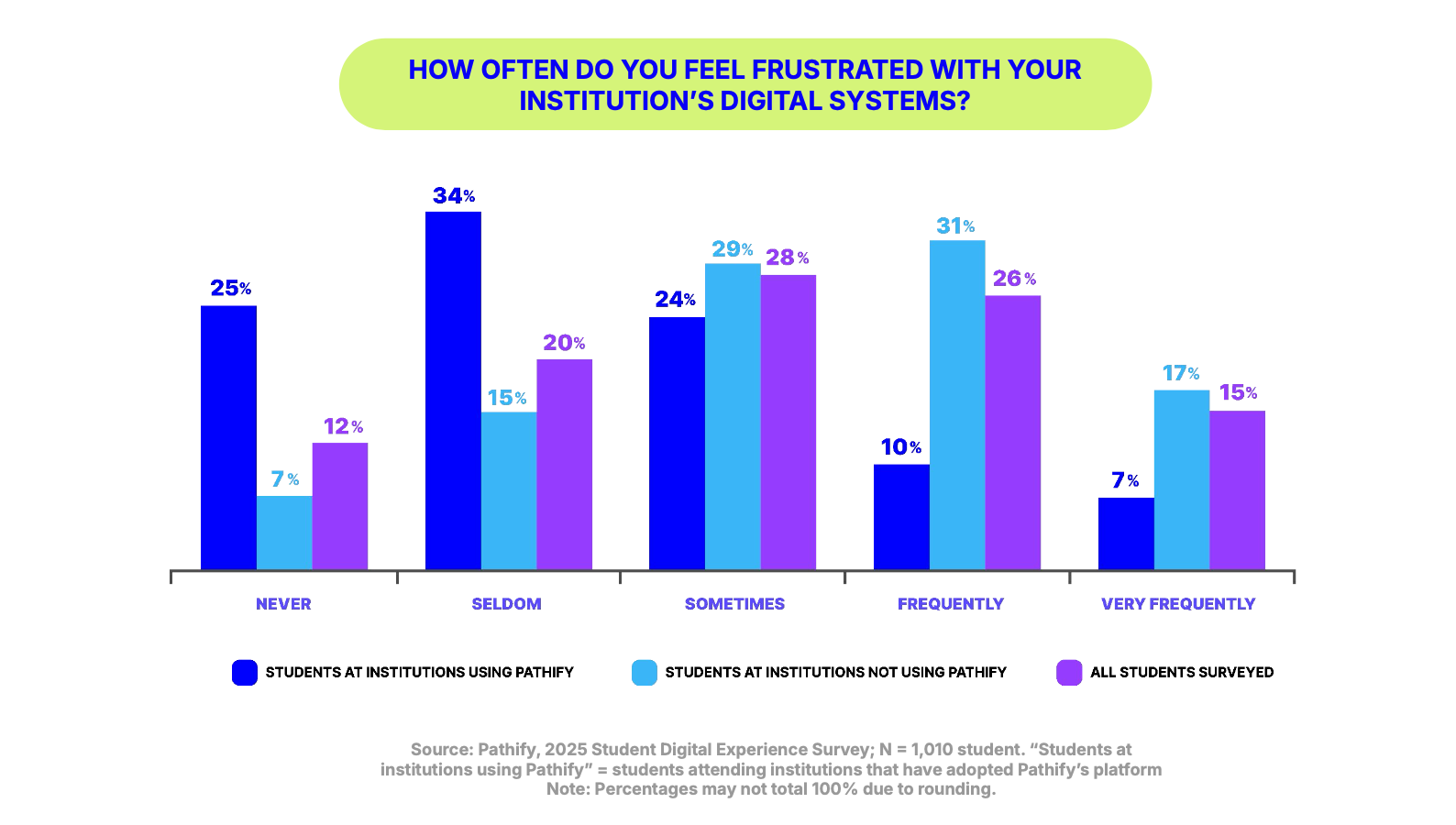
The daily friction caused by scattered digital systems leaves a mark on students. Nearly 70% of students feel frustrated with their institution’s digital systems “sometimes,” “frequently” or “very frequently” — a number reflecting the emotional and academic toll a poor digital environment takes. Over time, this frustration causes students to lose trust, creating a widening gap leading to deep student dissatisfaction and a high-frequency problem across higher education.
The Call for One Unified Platform
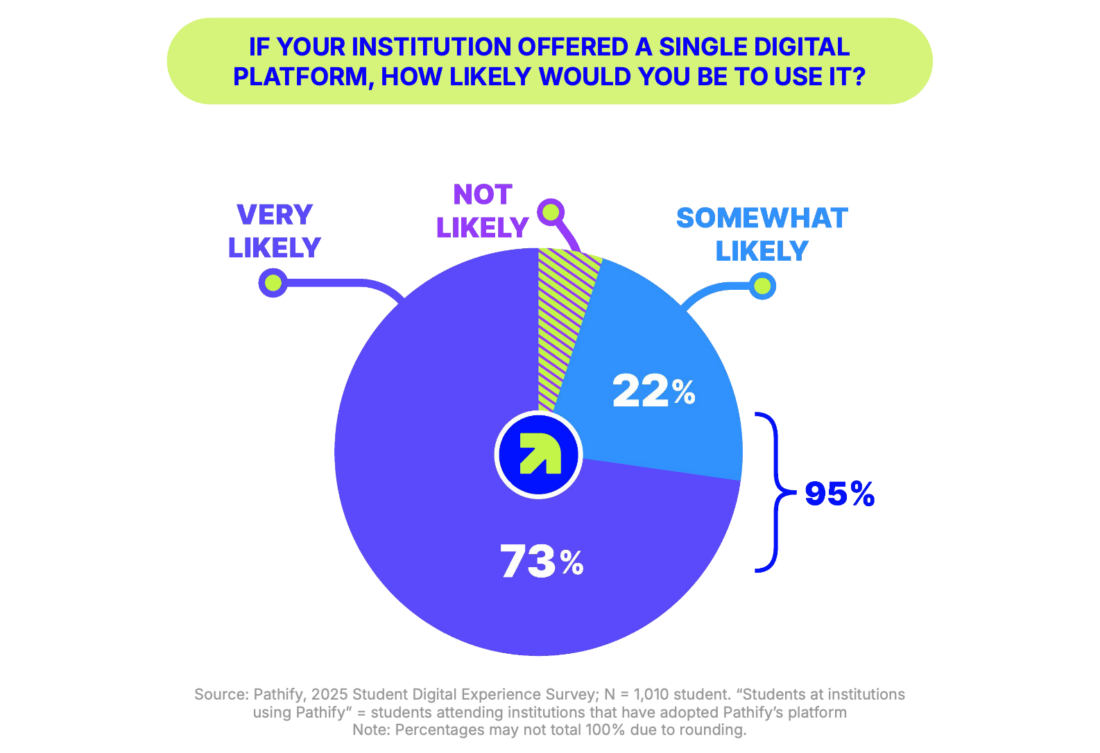
The survey points to a clear solution: adopting one unified digital platform. When asked whether they would use a single digital platform if their institution offered one, a resounding 95% of students said they are “somewhat likely” or “very likely” to use it. Students want a unified campus platform – now it’s up to institutions to deliver.
Digital fragmentation blocks progress and fragments the student experience, but the path forward takes shape. Download the full 2025 Pathify Digital Student Survey to explore the full scope and data-backed solutions enabling institutions to close the experience gap.
Click here to access the full 2025 Pathify Digital Student Experience Survey.