

Quick Summary:
Friction often hides in plain sight. Small barriers clutter daily tasks — extra logins, multiple links and repeated steps across disconnected systems. Each moment strains the experience on its own, yet the cumulative effect dictates how students engage, how staff allocates time and how institutions earn trust. Over time, these moments result in measurable institutional risk — and our 2025 Student Digital Experience Survey puts hard numbers behind it.
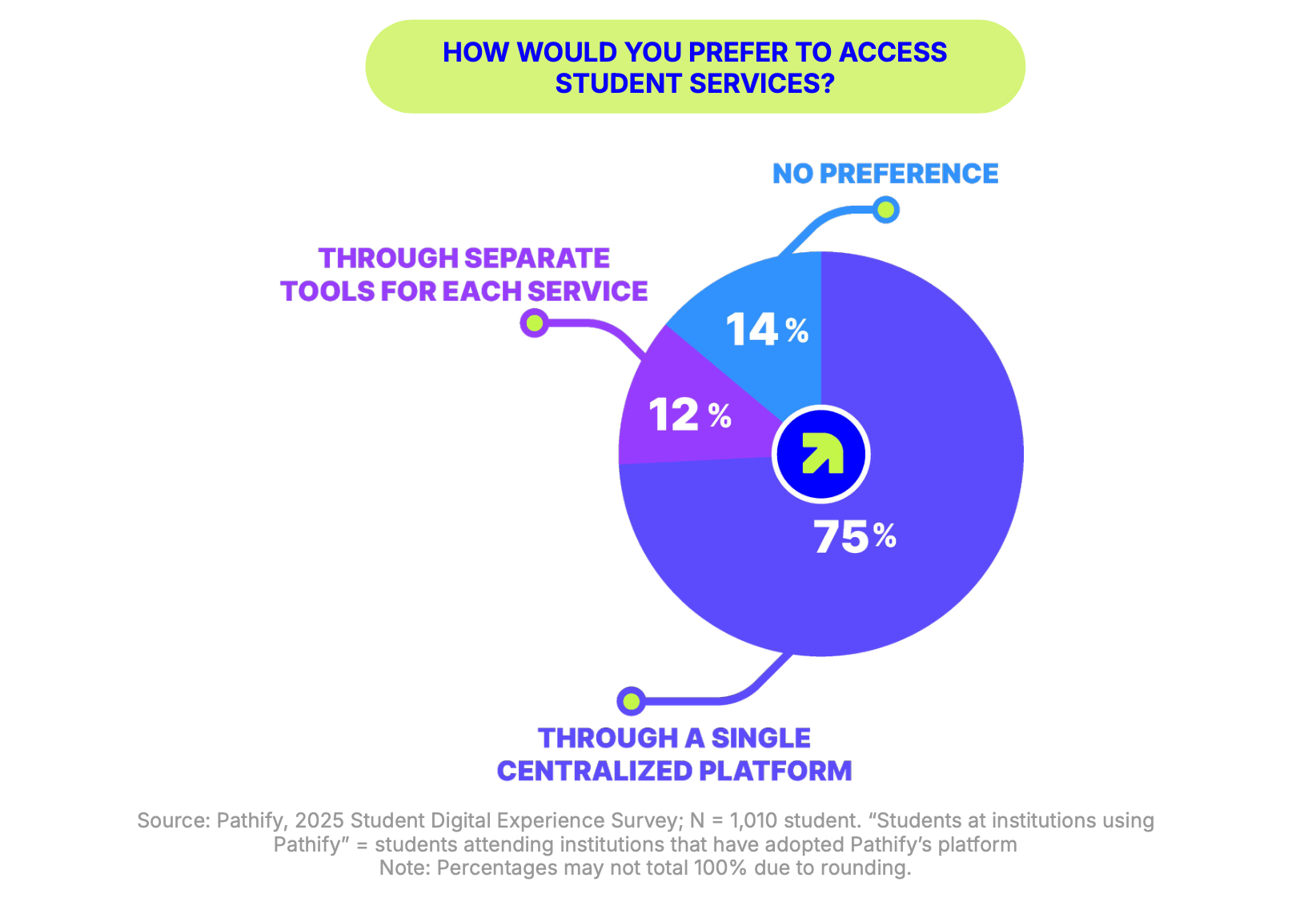
The impact burdens everyone on campus. Academic advisors dig through fragmented portals just to answer basic questions, spending time searching instead of supporting the students who need them. When 75% of students prefer a single centralized platform over separate tools, the case for change surpasses mere convenience. The stakes? Enrollment, staff burnout and institutional reputation.
The Word of Mouth Risk
Ever yelled out of frustration at the computer…searching and searching for information until abandoning the task becomes the only option?
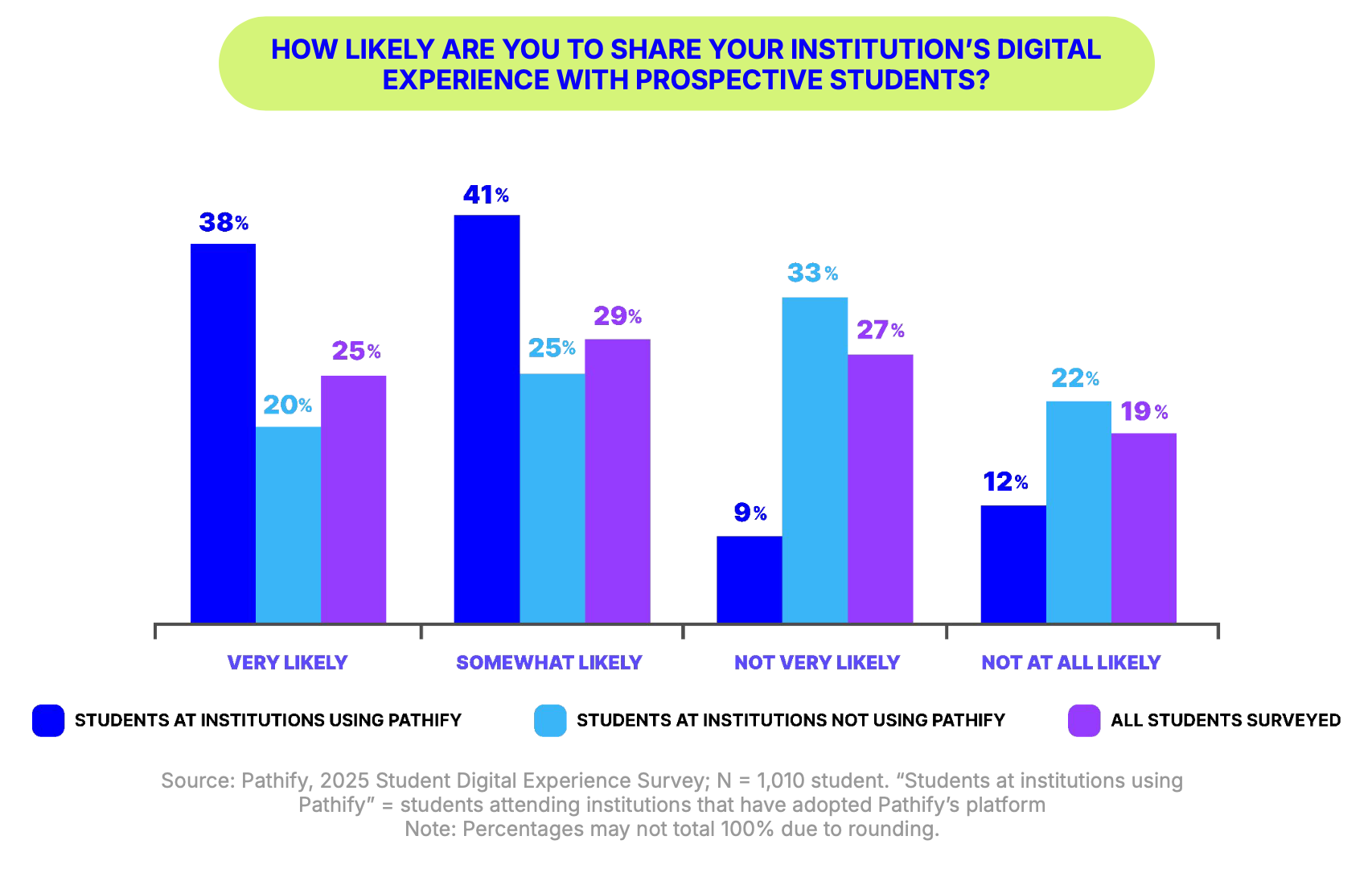
Students hit this wall every day — and instead of yelling into the void, they vent to peers. Over half (54%) say they’re somewhat or very likely to share their institution’s digital experience with prospective students — even if negative. Every login loop and broken link reaches an audience. And the stakes extend well beyond reputation. Poor digital experiences alienate more than just current students — they drive prospective students away before they ever set foot on campus.
Every login loop and broken link reaches an audience.
The Digital Ultimatum
Students weigh a lot of factors when choosing a college — academics, cost, location, campus culture. But a growing number adds something else to the list: digital experience.
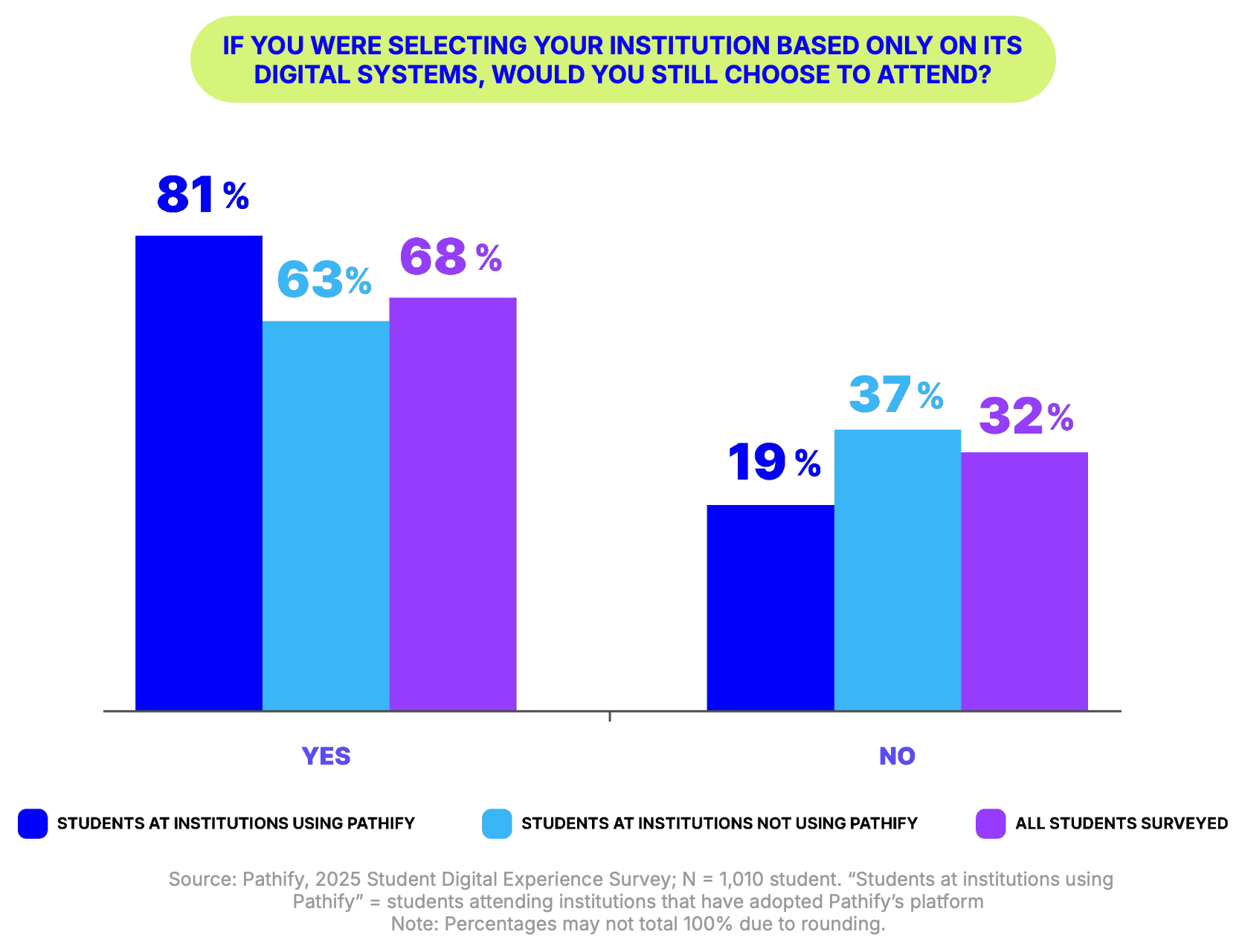
Digital experience serves as a high-stakes component of college selection, actively driving potential students to reconsider their enrollment. A staggering 32% of students would reconsider their college choice if the decision were based solely on digital systems — nearly one in three students factoring technology into a life-changing decision.
Students arrive already fluent in consumer-grade technology, with little patience for frustrating digital experiences. One-click checkouts, instant streaming, apps built around reducing every possible point of friction — seamless, intuitive tools set the bar long ago. But then, they arrive on campus. They encounter multiple logins, disconnected systems and a maze of endless links. The contrast doesn’t go unnoticed — and for a generation accustomed to technology working for them, not against them, the frustration hits harder. And some institutional leaders know it. As one provost at a private four-year university noted in a Collegis Education survey,
“Having those types of shiny toys and objects is, of course, an important thing so that we can demonstrate that we are maintaining competitiveness in the world of technology. And so that we’re preparing students for their world outside the university when they’re done.”
Digital experience now factors into enrollment decisions at every level — and institutional leaders who recognize this hold a real competitive advantage.
The Hidden Staff Cost
The conversation around fragmented digital systems usually centers on students. But the staff tasked with making the systems work equally pay the price.
Academic advising, admissions, financial aid, student services, and IT — staff navigate a maze of disconnected systems every day. Manual data retrieval creates friction. Compiling transfer credits, financial aid status and degree audits involves accessing the SIS, CRM and ERP individually. Each system demands an independent login and unique search.The burnout numbers reflect it. According to Inside Higher Ed, 58% of higher ed IT staff reported burnout in 2024, with 70% describing their workload as excessive.
of higher ed IT staff reported burnout in 2024 — Inside Higher Ed.
of higher ed IT staff describe their workload as excessive.
The necessity of juggling multiple systems means staff spend excessive time on data management instead of proactively supporting students. The workload — and constant manual cross-referencing — stemming from disconnected systems leads to mistakes. For advisors, mistakes in financial aid statuses, degree requirements or transfer credits carry real consequences — for students and for the institutions paying the price of fixing them. Every manual workaround diverts resources away from where they matter most. This level of digital friction across both the student and staff experience demands intervention.
The CXP Solution
The word-of-mouth risk, the enrollment impact and staff burnout all traces back to the same root cause: digital fragmentation.
Students overwhelmingly prefer a unified platform over juggling multiple systems. And a solution to staff burnout? Less system friction. Pathify’s Campus Experience Platform gives students, advisors and administrators back the time they currently spend toggling through disconnected systems — time for proactive advising interactions and other important tasks directly impacting the satisfaction of the entire campus community.
The 2025 Pathify Student Digital Experience Survey explores the full scope of these findings and the data-backed solutions enabling institutions to act. Download the full report and watch our live webinar to dig deeper.
Click here to access the full 2025 Pathify Digital Student Experience Survey.